
Published on
·
4 minutes
PrivateGPT vs Zylon: what’s the difference, and when is Zylon the better enterprise choice?

Cristina Traba
Quick Summary
Private AI is quickly becoming a board-level priority—but once you get past the buzzwords, the real question is practical: do you need an open-source foundation to build on, or an enterprise platform you can roll out across teams with governance baked in? In this post, we’ll break down the differences between PrivateGPT and Zylon, explain where each one shines, and help you choose the right path for your organization.
If you’re shopping for “private GPT” inside a large organization, you’ll usually hear two kinds of proposals:
“Here’s an open-source foundation—your team can build the rest.”
“Here’s an enterprise platform you can standardize on—your teams can use it today, and your engineers can extend it tomorrow.”
At Zylon, those two paths are represented by PrivateGPT and Zylon.
PrivateGPT is the open-source foundation: a great way to run private, context-aware AI and build custom apps in your own environment.
Zylon is the enterprise platform: an on-prem/private-cloud AI workspace plus an API Gateway that makes it easy to integrate AI into real business systems.
This post breaks down the difference in practical terms, and helps you decide which one fits your situation.
The simplest way to think about it
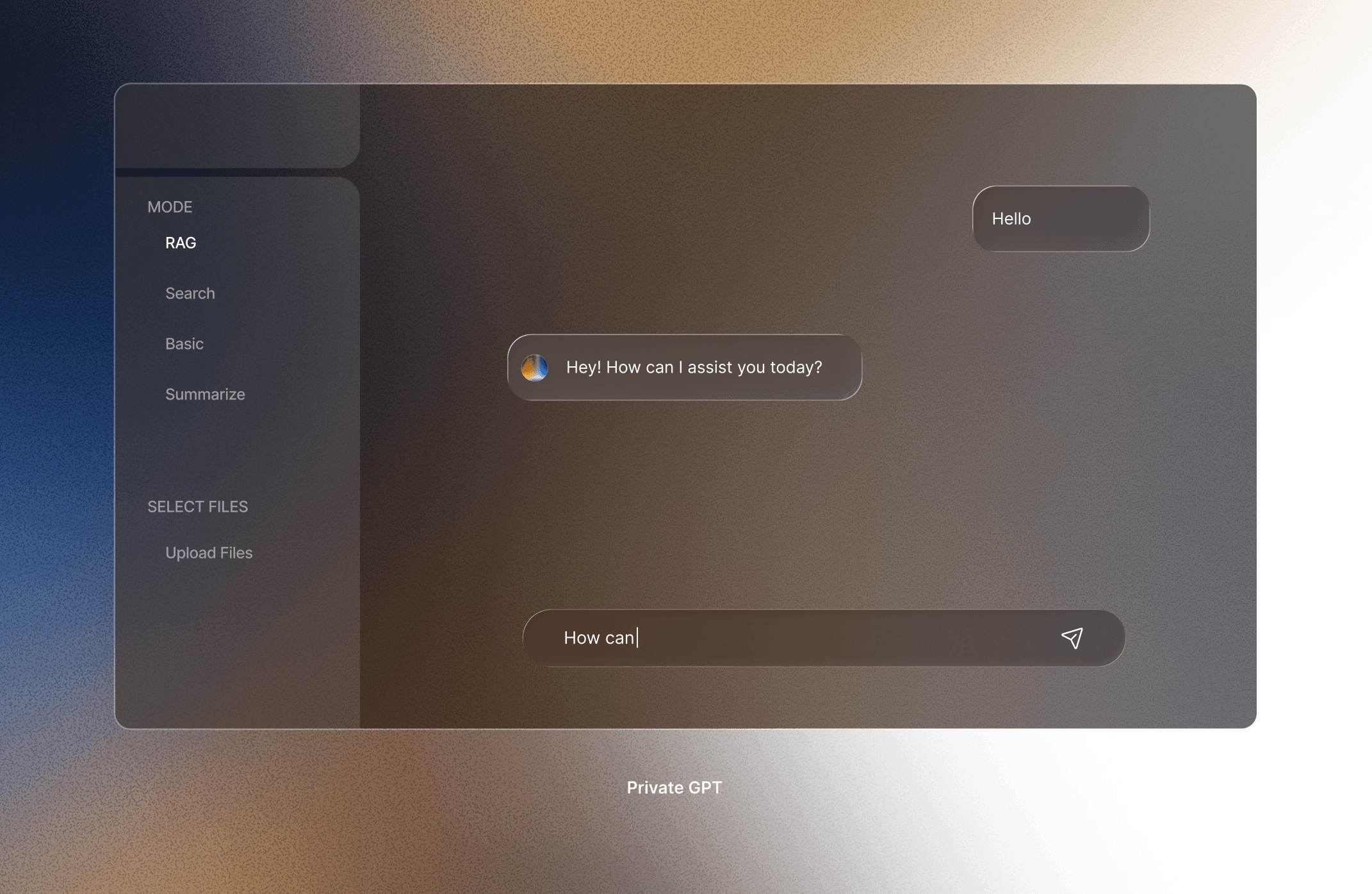
PrivateGPT is the “kit”
PrivateGPT is what you reach for when you want to build a tailored GenAI solution and you’re happy to own the product surface and the platform around it—identity, access control, logging, governance, user management, and so on.
It’s a strong option for teams that want maximum control and already have the engineering bandwidth (and appetite) to assemble a complete internal product.
Zylon is the “platform you roll out”
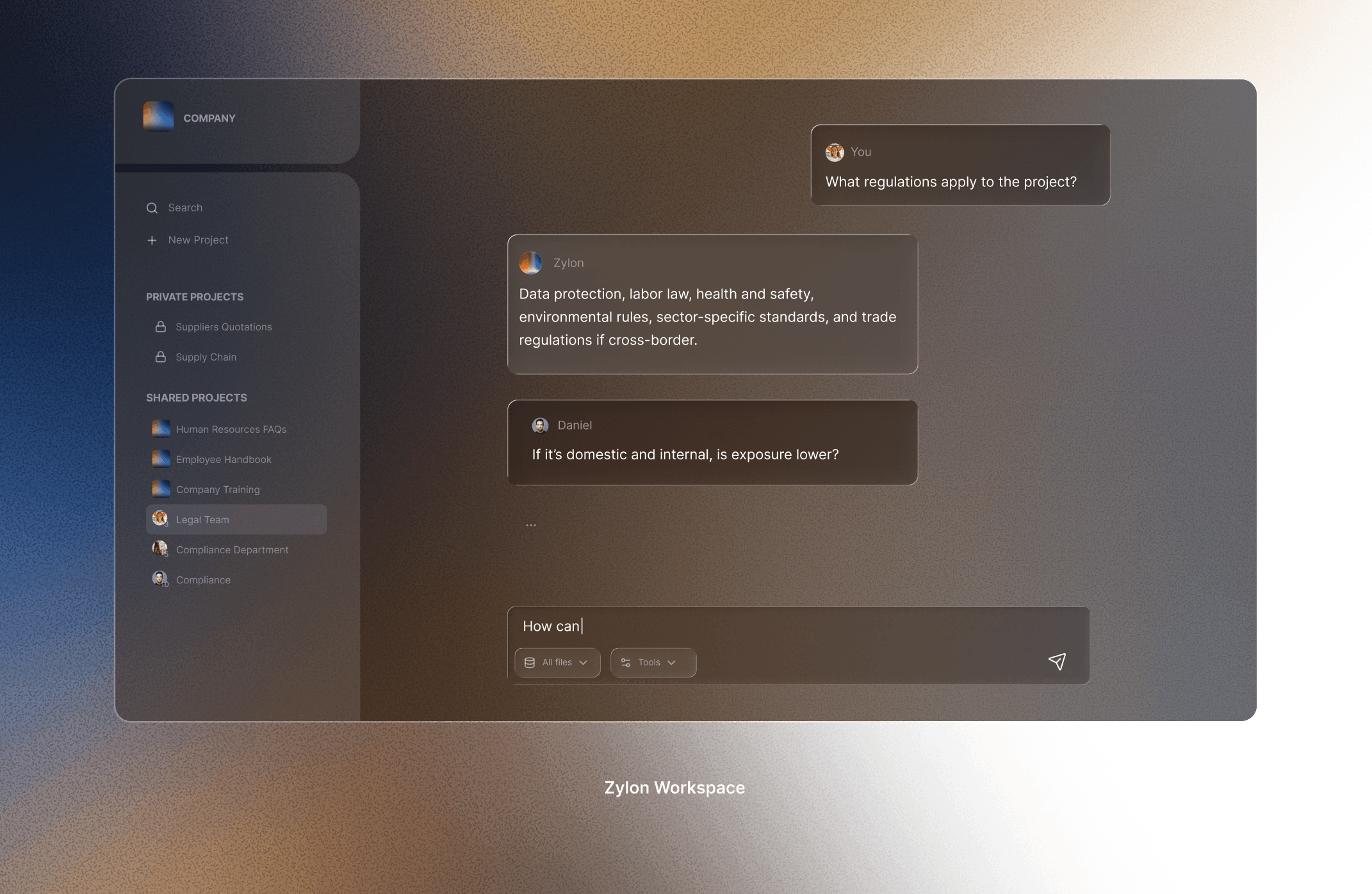
Zylon is what you choose when the goal is enterprise adoption: multiple teams, real users, real governance requirements, and a deployment model that fits security constraints.
And it’s not “just a UI.” The key difference—especially for enterprises—is that Zylon includes an API Gateway that lets you build far beyond chat. You can wire Zylon into existing systems, automate workflows, and build custom apps and services on top of the platform.
Quick comparison
Category | PrivateGPT | Zylon |
|---|---|---|
What it is | Open-source framework + OpenAI-compatible API to build private, context-aware apps | Enterprise private AI workspace for regulated industries; deployed on-prem/private cloud |
Primary user | Developers / platform teams | Business users + admins + IT/security |
Core value | Fast path to a private RAG/app backend you control | A complete product: collaboration, governance, deployment + operations |
Collaboration | You build it | Real-time collaboration in shared work (agent flow outputs) |
Governance | You build it | RBAC/project roles + audit logs + admin analytics |
Data access | Bring your own ingestion/connectors | Built-in knowledge connectors + tools/connectors (e.g., DB connector) |
Deployment & ops | You own packaging/ops decisions | Structured installation modes incl. semi- and full-airgap |
Why the API Gateway changes the conversation
Most enterprise AI projects don’t stay “a chat tool” for long. The real value shows up when AI becomes part of everyday workflows:
drafting and reviewing contracts
triaging tickets
extracting structured data from long documents
summarizing and comparing vendor responses
answering questions over internal knowledge
generating reports and updates from multiple sources
embedding assistants inside internal portals and tools
With Zylon’s API Gateway, you can treat Zylon as a shared internal AI platform—not just a place people go to chat. That’s the difference between “a useful tool” and “a standard capability the company can build on.”
What Zylon gives enterprises out of the box
When teams start with an open-source base, they often underestimate how much “enterprise plumbing” they’ll need to add before the solution is safe, scalable, and supportable. Zylon is built to cover that gap.
Here’s what that typically includes:
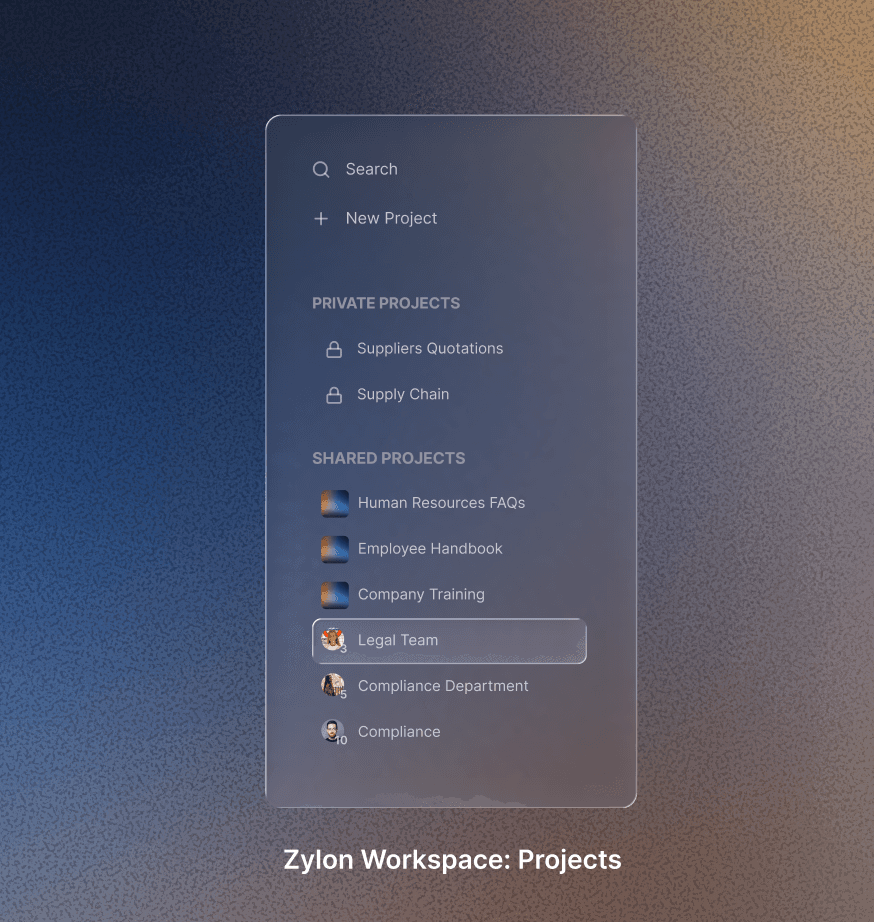
1) A multi-team workspace model
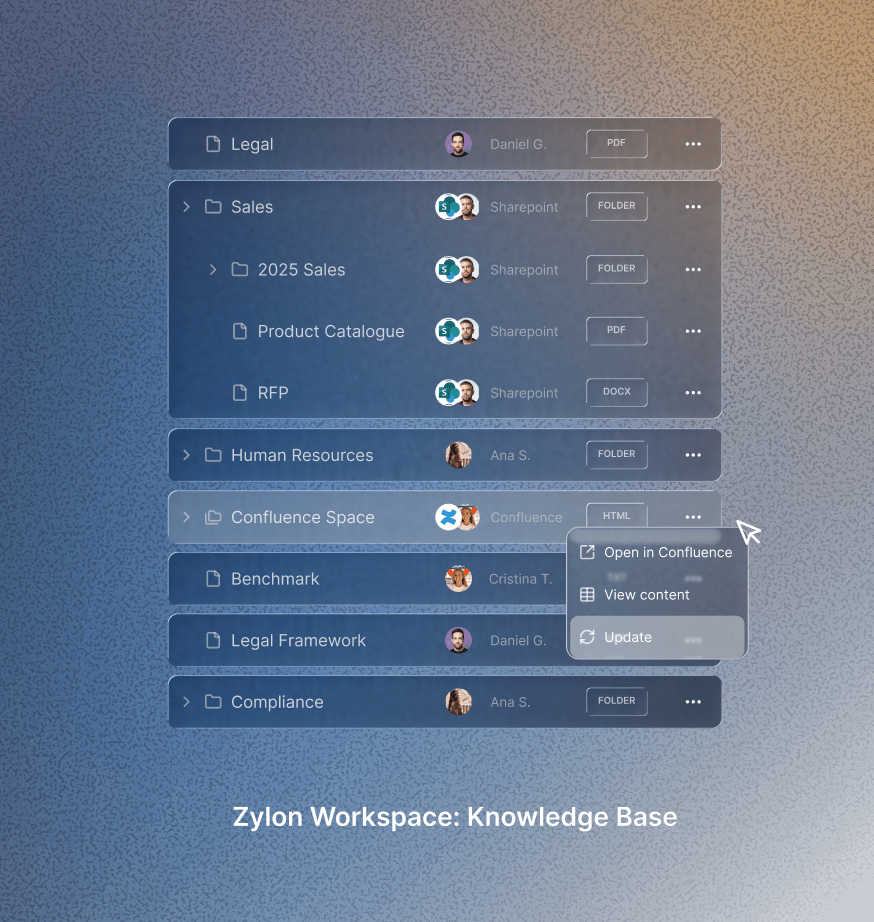
Enterprises need a clean way to separate work across teams, departments, and use cases—without creating a maze of one-off deployments. Zylon is designed as a shared workspace platform where organizations can scale adoption without losing control.
2) Governance and operational controls
In practice, “private AI” isn’t just about where the model runs. It’s also about controls: who can access what, how usage is tracked, and how the system is monitored and managed over time.
Zylon is built to support that kind of operational reality from day one.
3) Extensibility without rebuilding everything
This is where the platform approach wins: you can start with what Zylon provides, then extend it through the API Gateway—integrations, automations, internal tools, department-specific apps—without redoing identity, security, logging, and platform management for every new use case.
When PrivateGPT is the better choice
PrivateGPT is a great fit when:
You’re building one focused application and don’t need a shared enterprise platform.
You want maximum flexibility in how the product looks and behaves.
You already have a platform team ready to handle governance, access control, logging, analytics, and ongoing operations.
You’d rather assemble best-in-class components yourself than adopt an integrated platform.
A good example: a product team embedding private RAG into an existing internal app, where all access control and UX live in that app already.
When Zylon is the better choice (the enterprise default)
Zylon is usually the right answer when:
You want to deploy something enterprise-ready across multiple teams quickly.
You expect usage to expand beyond a single workflow—and you don’t want each team spinning up its own “mini platform.”
You need a platform that supports governance and operations, not just “running a model.”
You want the benefits of a workspace for end users and the ability to build serious integrations and internal AI services via an API Gateway.
A good example: rolling out private AI to legal, compliance, procurement, operations, and engineering—while enabling platform/IT teams to integrate AI into ticketing systems, knowledge bases, and internal portals.
A quick decision guide
If your main question is “How fast can we roll this out safely across the company?” → choose Zylon.
If your main question is “How do we build a custom solution from scratch on an open-source base?” → choose PrivateGPT.
Want to see Zylon in an enterprise setup?
If you’re evaluating private AI for a regulated environment and want to understand what enterprise rollout looks like in practice, book a demo here:
Schedule a Zylon demo
Author: Cristina Traba Deza, Product Designer at Zylon
Published: March 2026
Cristina designs secure, on-premise AI platforms for regulated industries, specializing in enterprise AI deployments for financial services, healthcare, and public sector organizations requiring full data control, governance, and compliance.
Published on
Writen by
Cristina Traba